What is Heat Stress?
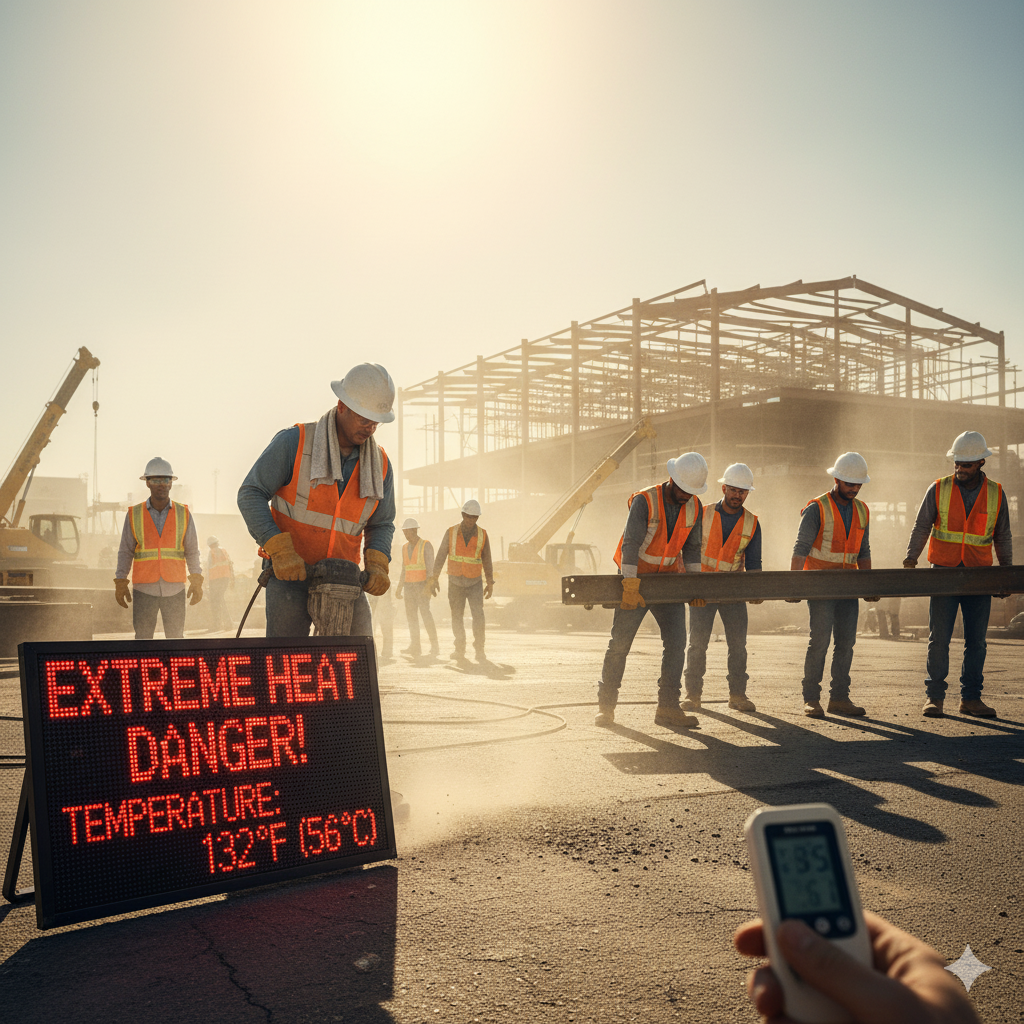
Heat stress occurs when the body is unable to regulate its temperature through natural cooling mechanisms like sweating. This can lead to a range of heat-related illnesses:
Heat Rash – Irritating skin condition caused by excessive sweating.
Heat Cramps – Painful muscle spasms resulting from salt and water loss.
Heat Exhaustion – Symptoms include dizziness, nausea, weakness, and rapid heartbeat.
Heat Stroke – A life-threatening emergency in which the body temperature rises above 104°F (40°C), leading to organ failure if untreated.
Who Is at Risk?
Certain workers are more vulnerable to heat stress:
Outdoor workers – Construction, agriculture, landscaping.
Indoor workers in hot or poorly ventilated spaces – Kitchens, factories, warehouses.
Workers wearing heavy PPE – Helmets, gloves, protective clothing.
New employees – Those not yet acclimatized to high temperatures.
These groups require special attention to prevent heat-related incidents.
Prevention: Key HSE Practices
1. Hydration is Critical
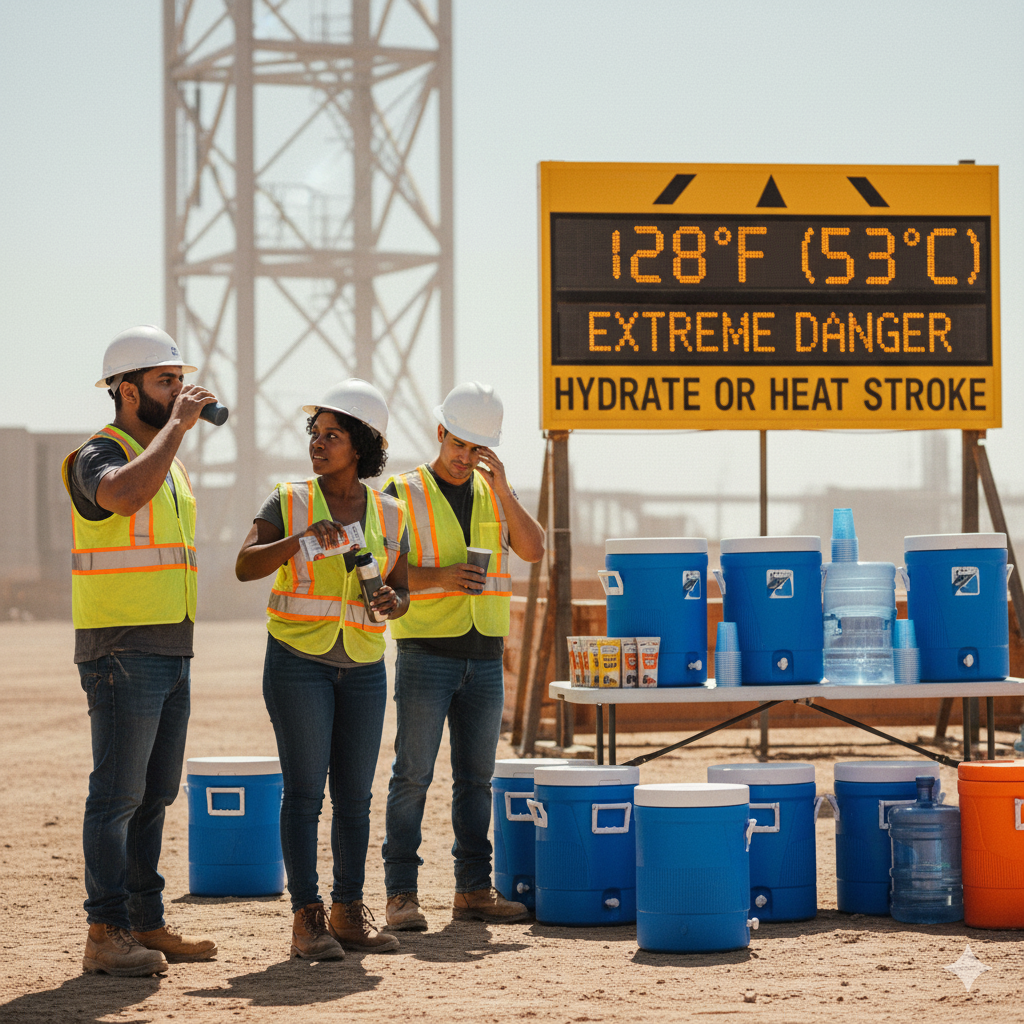
Encourage employees to drink water every 15–20 minutes, even if they do not feel thirsty. Proper hydration helps maintain body temperature and prevents dehydration.
2. Schedule Smart
Plan heavy labor tasks for the cooler parts of the day, such as early mornings or evenings, to reduce exposure to peak heat.
3. Dress for the Weather
Workers should wear light-colored, loose-fitting, breathable clothing that allows sweat to evaporate and facilitates cooling.
4. Train & Educate
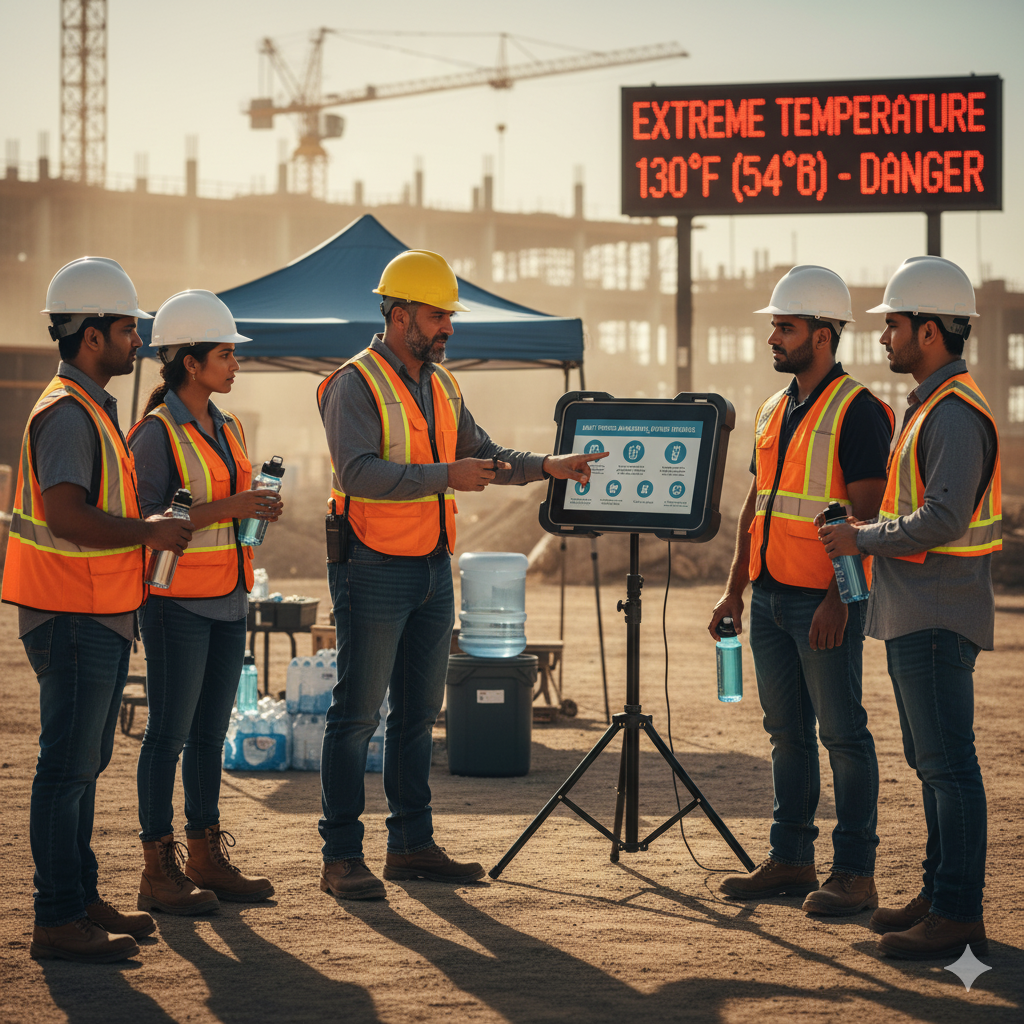
Both workers and supervisors should be trained to recognize the signs of heat-related illnesses and understand the proper response measures.
5. Use the Buddy System
Always work in pairs or teams to monitor co-workers for early signs of heat stress, such as dizziness, confusion, or nausea.
6. Provide Cool Rest Areas
Designate shaded or air-conditioned rest areas where employees can recover during breaks. Frequent rest periods are essential for preventing overheating.
What Employers Must Do (HSE Guidelines)
Employers have a responsibility to ensure the safety and well-being of employees. According to HSE guidelines:
Conduct a heat risk assessment for all hot work environments.
Implement control measures, such as shade, fans, job rotation, and workload adjustments.
Provide PPE, including cooling vests or light protective clothing, where needed.
Maintain incident logs and follow up on any heat-related issues to prevent recurrence.
By following these guidelines, employers can create a safer workplace while reducing the risk of heat-related injuries and fatalities.
Heat Stress is Preventable
With proper awareness, planning, and preventive measures, heat stress is completely preventable. Education, hydration, acclimatization, and monitoring are key strategies that protect workers, maintain productivity, and ensure compliance with workplace safety standards.