
Managing Environmental Hazards at Work
Environmental hazards in the workplace can significantly impact not only employee health but also the surrounding ecosystem. These hazards include chemical exposures, air pollutants, improper waste disposal, and noise pollution all of which can result in legal liabilities and reputational damage.

Understanding Environmental Hazards in the Workplace
Environmental hazards in the workplace pose a dual threat: they endanger employee health and well-being while simultaneously harming the surrounding ecosystem. These hazards can take many forms, including chemical exposures, air pollutants, improper waste management, and noise pollution. If left unmanaged, they can result in legal liabilities, financial penalties, and reputational damage for organizations. Proactively addressing these hazards not only safeguards workers but also ensures compliance with environmental legislation and promotes corporate sustainability.
Common Workplace Environmental Hazards
Hazardous Substances
Spills, leaks, or improper storage of chemicals can lead to soil, air, and water contamination.
Workers may face risks of burns, respiratory issues, or long-term chronic illnesses.
Poor Air Quality
Dust, fumes, and emissions from machinery or industrial processes reduce indoor air quality.
This can cause headaches, fatigue, and respiratory disorders, and may also impact nearby communities.
Noise Pollution
Prolonged exposure to loud equipment increases risks of hearing loss, stress, and reduced productivity.
Excessive noise can also affect surrounding residential and ecological environments.
Inadequate Waste Disposal
Mixing hazardous and non-hazardous waste leads to unsafe handling, soil contamination, and groundwater pollution.
Poor segregation also increases disposal costs and regulatory risks.
Fire and Explosion Risks
Improper storage of flammable or combustible materials without ventilation or fire controls poses serious risks.
Such incidents can cause catastrophic damage to employees, infrastructure, and the environment.
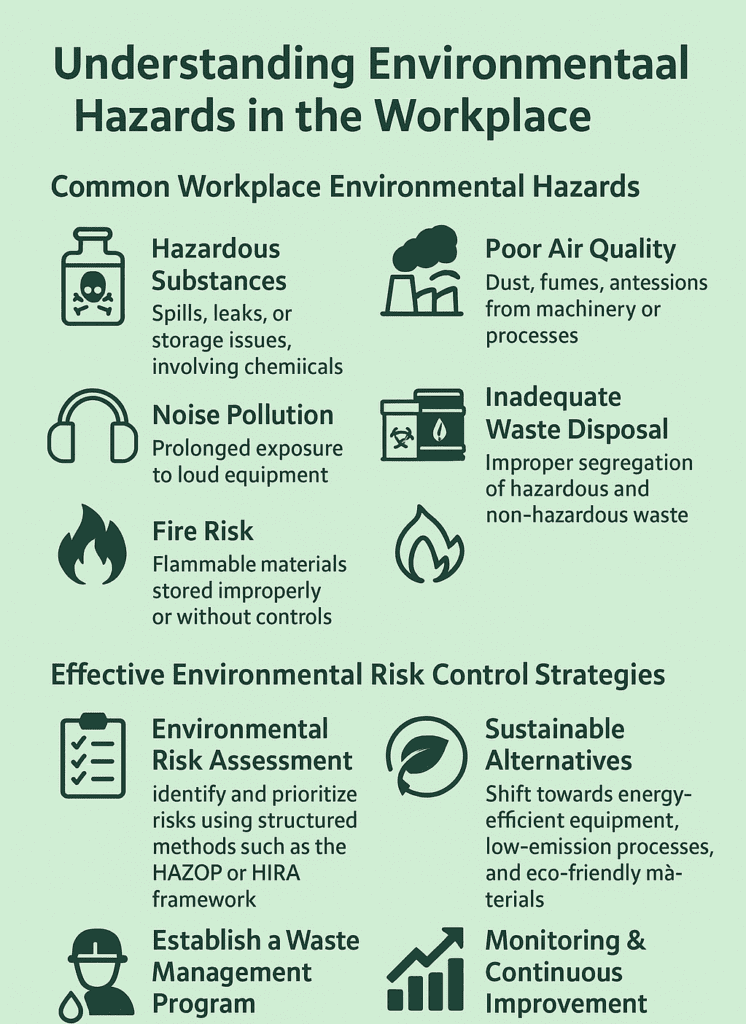
Effective Environmental Risk Control Strategies
Conduct Environmental Risk Assessments
Use structured frameworks such as HAZOP (Hazard and Operability Study) or HIRA (Hazard Identification and Risk Assessment) to identify, evaluate, and prioritize risks.
Risk assessments should be updated regularly as processes and technologies evolve.
Implement a Waste Management Program
Establish protocols for safe collection, segregation, and disposal of different waste streams.
Incorporate recycling initiatives and hazardous waste treatment to minimize environmental footprint.
Spill Response & Chemical Handling Training
Provide staff with training on safe chemical storage, emergency spill kits, and proper use of personal protective equipment (PPE).
Develop an emergency response plan with clear communication channels and drills.
Adopt Sustainable Alternatives
Transition to energy-efficient equipment, renewable energy sources, and low-emission processes.
Promote the use of biodegradable materials and eco-friendly substitutes for hazardous chemicals.
Monitoring and Continuous Improvement
Track environmental performance indicators such as emissions, energy consumption, and waste volumes.
Conduct annual reviews, set measurable targets, and adopt a continuous improvement cycle aligned with ISO 14001 Environmental Management Standards.
