
Industry-Specific Manual Handling Risks and Solutions
Manual handling risks vary greatly depending on the industry. A construction worker faces different hazards than a nurse or warehouse employee. To ensure effective workplace safety, employers must address industry-specific manual handling risks and implement tailored solutions.

Industry-Specific Manual Handling Risks and Solutions
Manual handling risks vary greatly depending on the industry. The risks faced by a construction worker are vastly different from those encountered by a nurse or warehouse employee. To ensure effective workplace safety, employers must assess the specific risks for each industry and implement tailored solutions. This blog explores the unique manual handling challenges across various industries and the best practices to mitigate these risks.


Construction Industry
Risks
In construction, workers face significant manual handling hazards, such as:
Heavy loads: Lifting and carrying materials like cement bags, steel beams, and machinery.
Awkward lifting: Workers often have to lift items in tight spaces or at odd angles, increasing strain on muscles and joints.
Uneven ground: Working on construction sites with rough, uneven terrain increases the risk of trips, slips, and falls during lifting tasks.
Solutions
To mitigate these risks, employers in the construction industry should implement the following measures:
Mechanical aids like cranes, wheelbarrows, and forklifts should be used to lift and transport heavy loads.
Team lifts should be promoted to distribute weight and reduce strain on individual workers.
Ensure that the ground is stable and level before starting tasks to avoid accidents caused by slipping or uneven footing.
Use ergonomic tools to reduce stress on the body during manual tasks.
Healthcare Industry
Risks
Manual handling in healthcare poses unique risks, especially when lifting or supporting patients, including:
Lifting and supporting patients: Nurses and caregivers often assist patients with mobility, which can lead to back and shoulder injuries if not done correctly.
Moving medical equipment: Heavy or awkwardly shaped equipment, such as medical beds and machinery, needs to be moved frequently in busy hospital environments.
Solutions
To minimize injuries in healthcare settings, employers should implement:
Hoists and patient handling aids like lifts and slings to support safe patient movement.
Training in safe lifting techniques for nurses, caregivers, and other healthcare staff to ensure they know how to safely lift or support patients.
Use sliding sheets and manual handling trolleys for easier movement of patients and equipment.
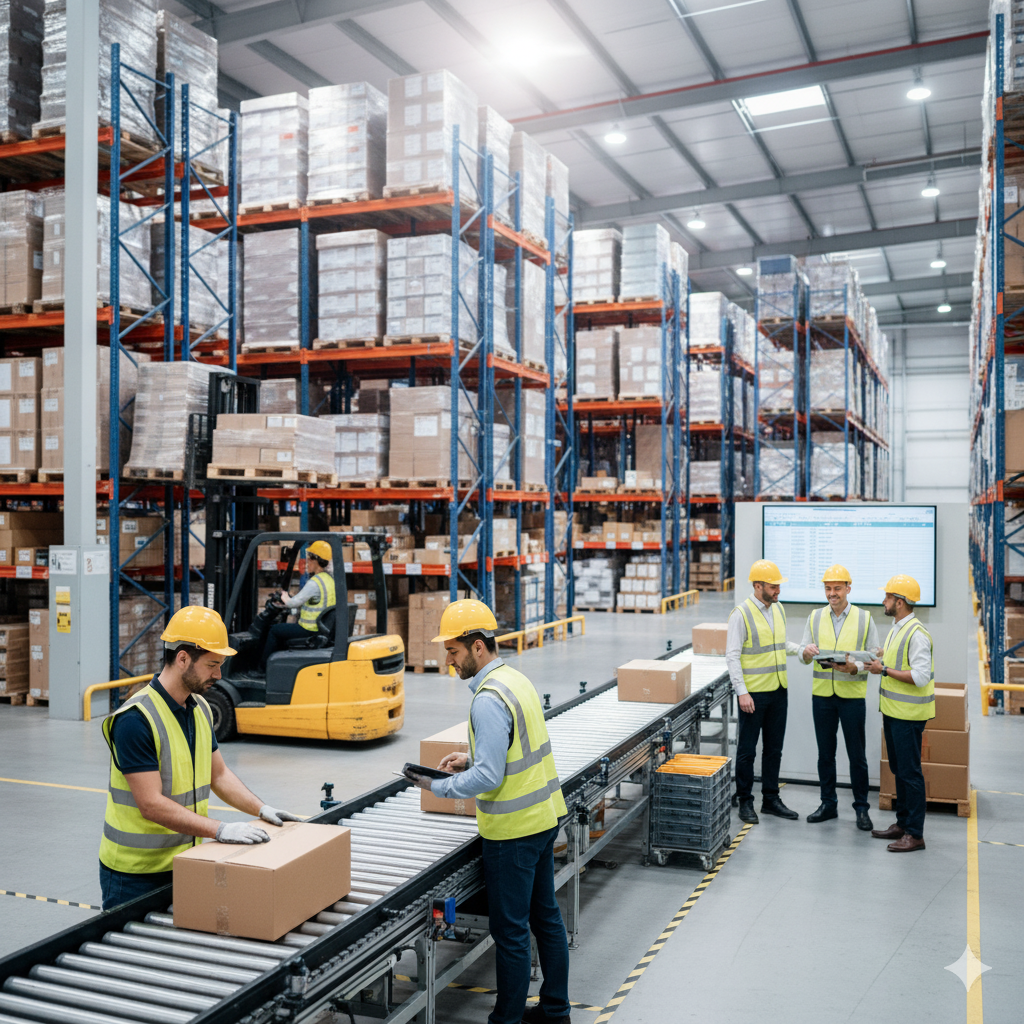
Warehousing & Logistics
Risks
The warehousing and logistics sector has significant manual handling risks due to:
Repetitive lifting: Warehouse employees often handle heavy boxes and materials in repetitive motions.
Stacking and storing: Storing goods at varying heights can increase the risk of improper lifting techniques.
Pushing heavy trolleys: Long periods of pushing or pulling trolleys can strain the body.
Solutions
Solutions for manual handling in warehouses and logistics include:
Use conveyors and forklifts to automate the movement of heavy goods, reducing strain on workers.
Job rotation and task rotation should be used to prevent repetitive strain injuries.
Employees should be trained in proper lifting techniques and provided with the necessary ergonomic equipment, such as trolleys or pallet jacks, to minimize risk.
Office Environments
Risks
While office environments are often considered low-risk, manual handling injuries still occur, particularly when:
Moving furniture: Workers often lift desks, chairs, and other office furniture, which can lead to strains or sprains.
Carrying files or printers: Heavy office equipment and file boxes can cause back injuries if not lifted correctly.
Solutions
For manual handling in office environments, employers can implement the following:
Encourage employees to ask for help when lifting heavy office items.
Provide trolleys or rolling carts to move office supplies and equipment.
Ensure that workspaces are ergonomically designed to minimize physical strain, such as adjustable desks and chairs.
Why Industry-Specific Training Matters
Each workplace has its own set of unique challenges and risks associated with manual handling. Customized training ensures that workers are properly equipped to handle tasks safely and efficiently. Industry-specific training helps employees understand the specific hazards they face and how to mitigate them effectively.
For example, construction workers need training in how to use lifting equipment safely and how to lift materials without causing injury, while healthcare workers must learn how to safely move patients with minimal strain on their bodies. By tailoring manual handling training to the needs of each industry, employers can reduce the risk of injury and create a safer workplace.
