
Heat Stress Risks in Construction: What Every Site Supervisor Must Know
Construction heat stress, workplace safety, outdoor worker health, heat hazards, HSE construction site, summer construction risks,
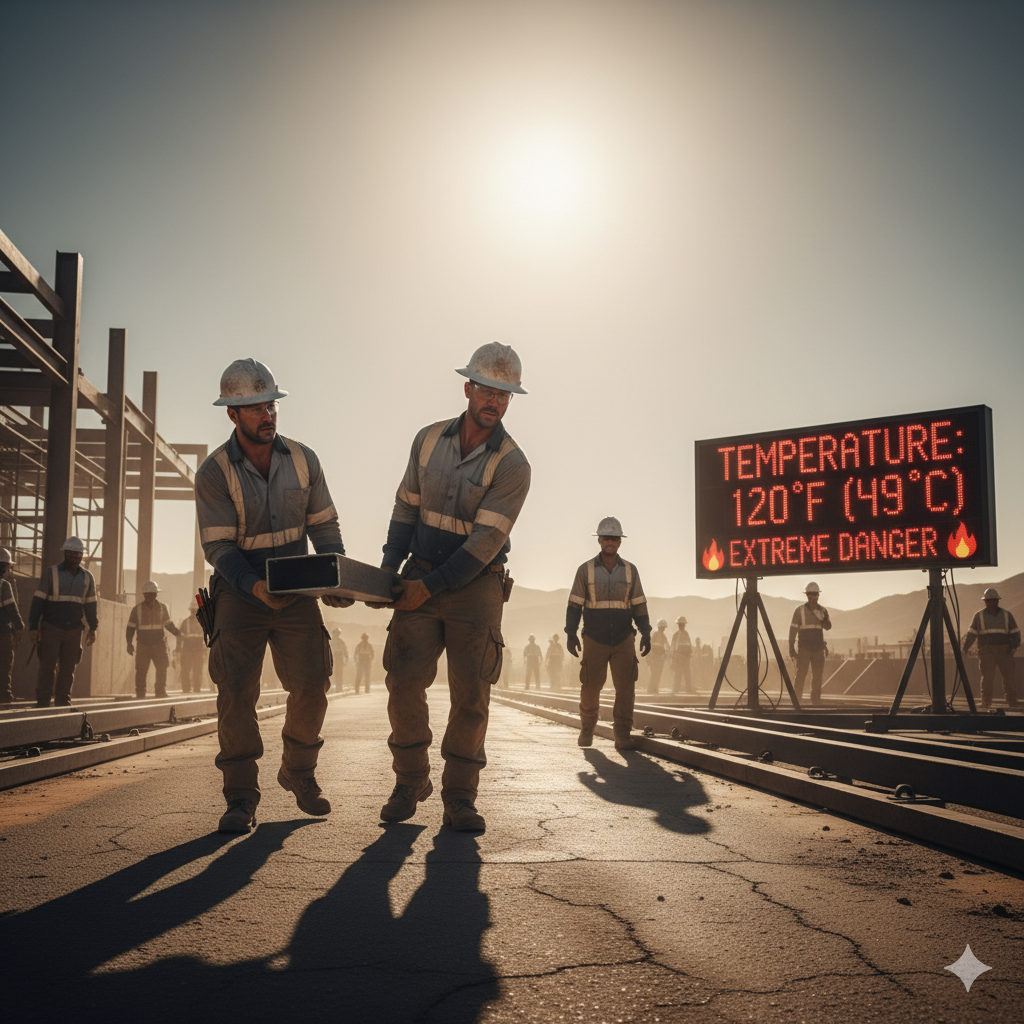
Construction work doesn’t stop just because it’s hot outside. But when heat combines with heavy labor, PPE, and long hours, it becomes a silent killer. The risk of heat stress in construction is significantly higher compared to many other industries.

Heat Stress in Construction: Protecting Workers from the Silent Killer
Construction work doesn’t stop just because it’s hot outside. However, the combination of high heat, heavy physical labor, Personal Protective Equipment (PPE), and long hours can turn what seems like a manageable day into a serious health risk. For construction workers, the risk of heat stress is significantly higher than in many other industries due to the nature of their environment and workload.
When heat exposure is coupled with strenuous physical activity and insufficient cooling measures, it can lead to heat exhaustion or even heat stroke—conditions that can be deadly if not managed promptly.
Why Construction Workers Are at High Risk
Construction sites often expose workers to several environmental factors that can contribute to heat stress:
Direct Sunlight and Hot Surfaces: Construction workers often work under direct sunlight, and surfaces like metal or concrete can absorb and radiate heat, making the environment even hotter.
Enclosed or Poorly Ventilated Areas: Indoor construction tasks, such as working in cramped spaces or poorly ventilated areas, prevent heat from dissipating, increasing the risk of overheating.
High Physical Workload: Activities such as digging, lifting, and climbing generate body heat and make it harder for the body to cool down naturally.
Heavy PPE: Wearing heavy personal protective equipment, including helmets, gloves, safety vests, and boots, further traps heat against the body, limiting natural cooling.
Limited Access to Shade or Water: Many construction sites are outdoors with limited shaded areas, and workers may not have easy access to water to stay hydrated.
When these factors combine, the body’s natural cooling mechanisms are overwhelmed, leading to heat exhaustion or heat stroke.
High-Risk Roles on a Job Site
Certain roles on construction sites are more exposed to the risks of heat stress than others. These include:
Roofers and Scaffolders: Spending extended periods under direct sunlight on elevated structures.
Steelworkers and Welders: High physical labor combined with the added heat from welding torches and metal surfaces.
Road Crews and Asphalt Layers: Working with hot asphalt in direct sunlight, which generates substantial heat.
Concrete Mixers and Pavers: Lifting and placing heavy materials in direct sunlight.
Workers Inside Machinery: Operators of cranes, loaders, or other machinery are often confined to small spaces with poor ventilation.
How to Protect Construction Teams
1. Site Risk Assessment
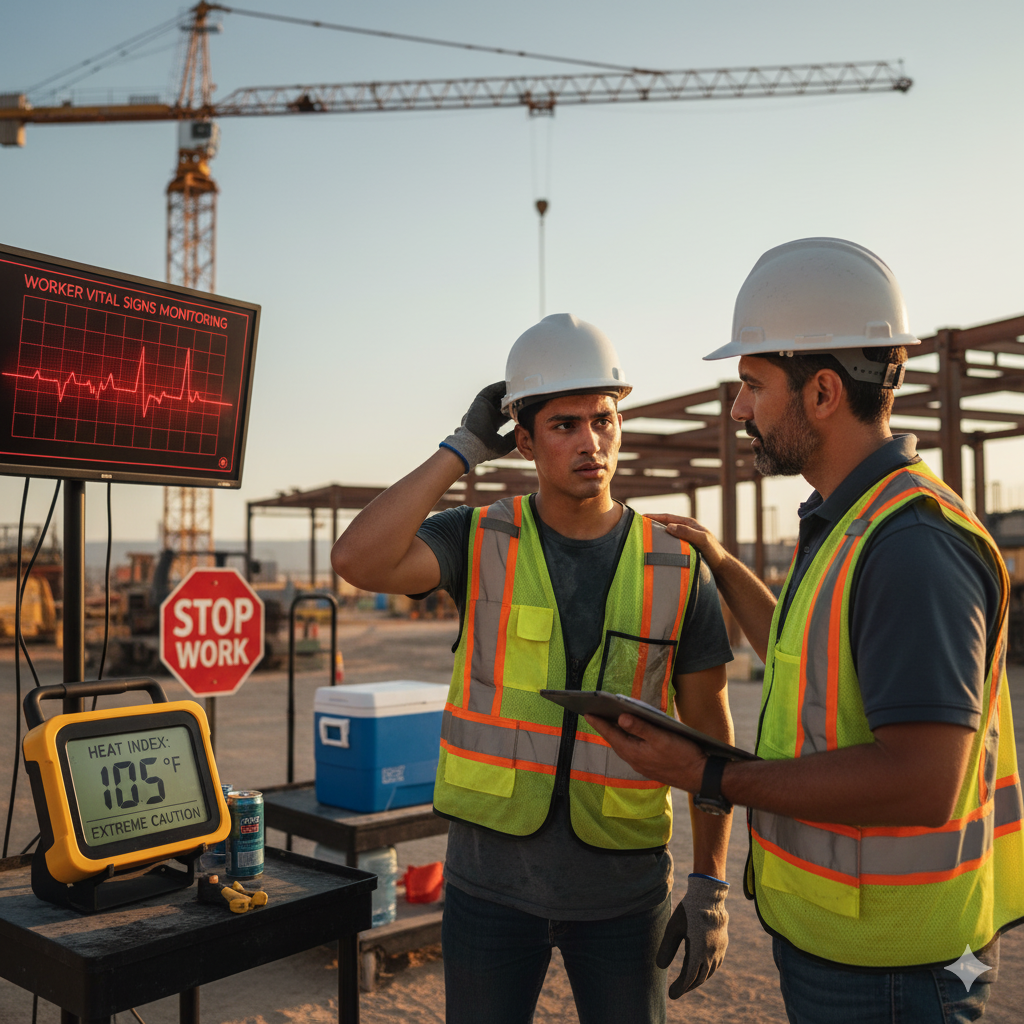
Before beginning any project, conduct a site risk assessment to identify areas where workers will be exposed to the most heat. Consider the location of workstations, sun-exposed areas, and hot work zones. Use temperature and humidity monitors to assess the heat stress risk and take proactive steps.
Tip: Conduct daily checks on the heat index and adjust work schedules based on weather conditions.
2. Hydration Stations
Ensure that workers have easy access to clean water and electrolyte drinks every 100–200 feet on-site. Encourage workers to drink regularly, especially during peak heat hours. Hydration stations should be clearly marked and regularly stocked.
Tip: Encourage workers to hydrate before they feel thirsty, as thirst is often a late indicator of dehydration.
3. Scheduled Rest Breaks
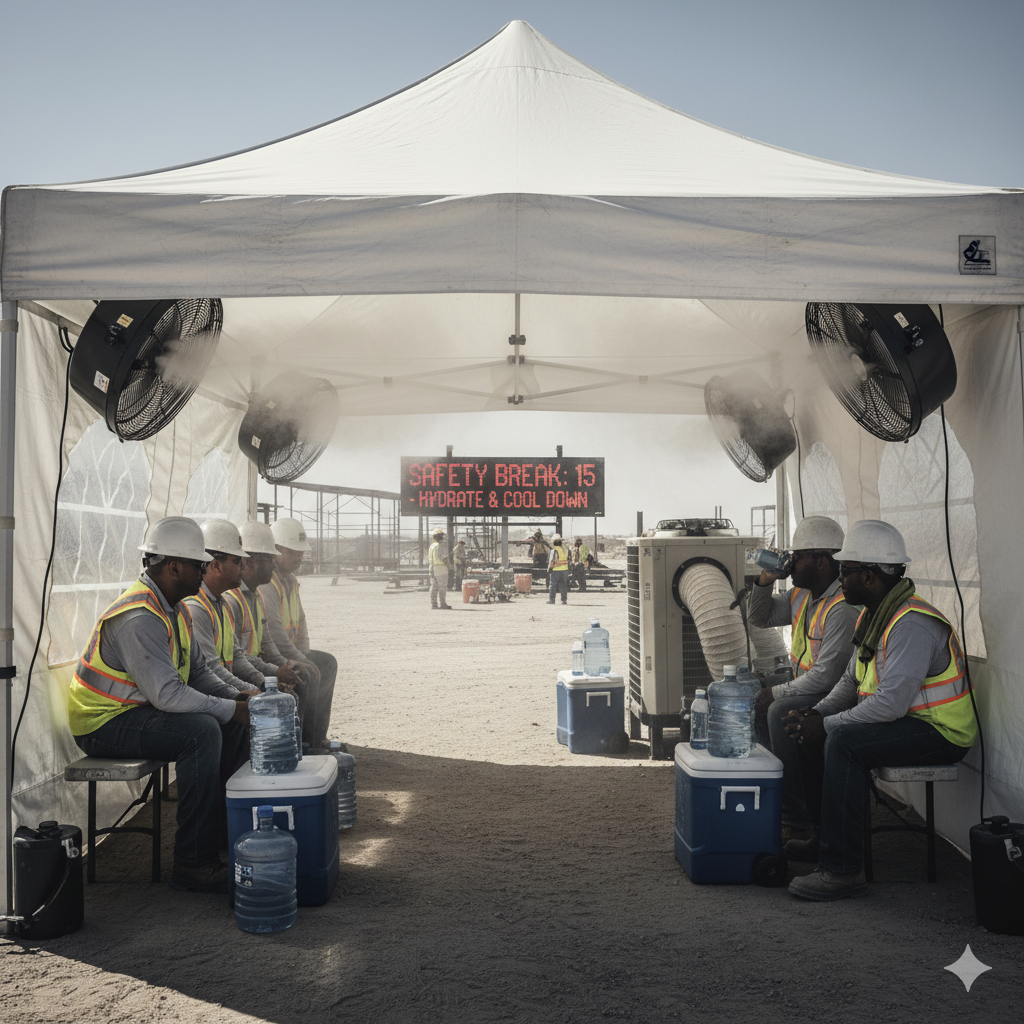
Implement “work-rest cycles” based on the heat index. Provide regular rest breaks in shaded areas or with portable cooling systems such as fans or air-conditioned tents.
Tip: Allow workers to rest in shaded or cooler areas every 30-45 minutes to recover from the heat.
4. PPE Adjustments
Offer breathable fabrics for PPE, including cooling vests, neck towels, or other cooling solutions that won’t compromise safety. Allow workers to take short breaks to remove their gear if possible.
Tip: Consider using lightweight, moisture-wicking fabrics that reduce heat buildup while maintaining protection.
5. Daily Toolbox Talks
Start each workday with a 5-minute safety talk focused on heat stress awareness. Discuss the symptoms of heat-related illness, how to recognize the early warning signs, and proper emergency response procedures.
Tip: Include real-life examples and emphasize the importance of early intervention when dealing with heat stress.
6. Buddy System
Establish a buddy system where workers are paired up to monitor each other for signs of heat exhaustion, fatigue, or confusion. Having a partner can ensure early intervention if a worker shows symptoms of heat stress.
Tip: Encourage workers to look out for each other’s well-being throughout the day.
Building Safety into the Foundation
Heat stress in construction is predictable and preventable. It requires only a few simple steps to protect workers from serious illness or death. Every worker who goes home healthy at the end of the day is a testament to the effectiveness of your safety program.
By embedding these heat stress prevention strategies into the foundation of your work practices, you not only protect your workforce but also ensure that your projects stay on track, on time, and within budget.
