
Recognizing and Responding to Heat Stroke in the Workplace
Heat stroke is the most dangerous form of heat stress and it can be fatal if not treated quickly. As temperatures rise, employers and workers must stay alert to early warning signs. Knowing what to do in the first few minutes can save lives.

Heat Stroke in the Workplace: Recognizing and Responding to a Critical Risk
Heat stroke is the most dangerous form of heat stress, and it can be fatal if not treated promptly. Rising temperatures, strenuous work, and heavy protective equipment put employees at higher risk, especially in construction, manufacturing, agriculture, and outdoor service jobs. Early recognition and swift action can save lives.
Understanding heat stroke, recognizing its symptoms, and knowing the correct first aid procedures are essential for employers, supervisors, and workers alike.

What is Heat Stroke?
Heat stroke occurs when the body’s temperature rises above 104°F (40°C) and the body can no longer regulate itself. This results in failure of the brain and internal organs. Often, heat stroke is preceded by untreated heat exhaustion, but it can also occur suddenly under extreme conditions.
Key Symptoms to Watch For
Workers and supervisors should be vigilant for these warning signs:
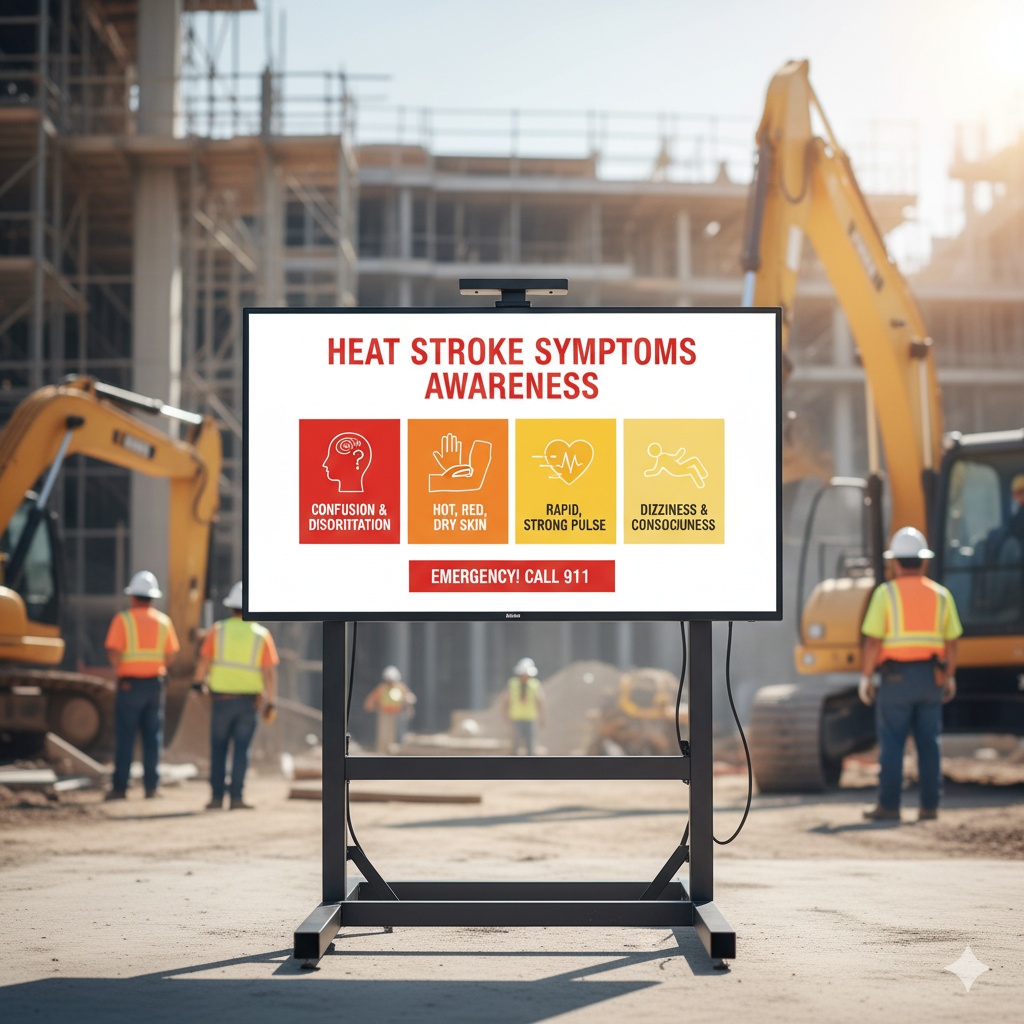
Confusion or Slurred Speech: The worker may appear disoriented or unable to respond clearly.
Loss of Consciousness: Fainting or unresponsiveness indicates severe heat stress.
Hot, Dry Skin: Lack of sweating despite high temperatures is a critical red flag.
Rapid Pulse and Breathing: The body is under extreme strain attempting to cool itself.
Seizures or Convulsions: Can occur due to overheating of the brain.
Nausea or Vomiting: May accompany other symptoms and indicate serious risk.
Emergency First Aid Steps
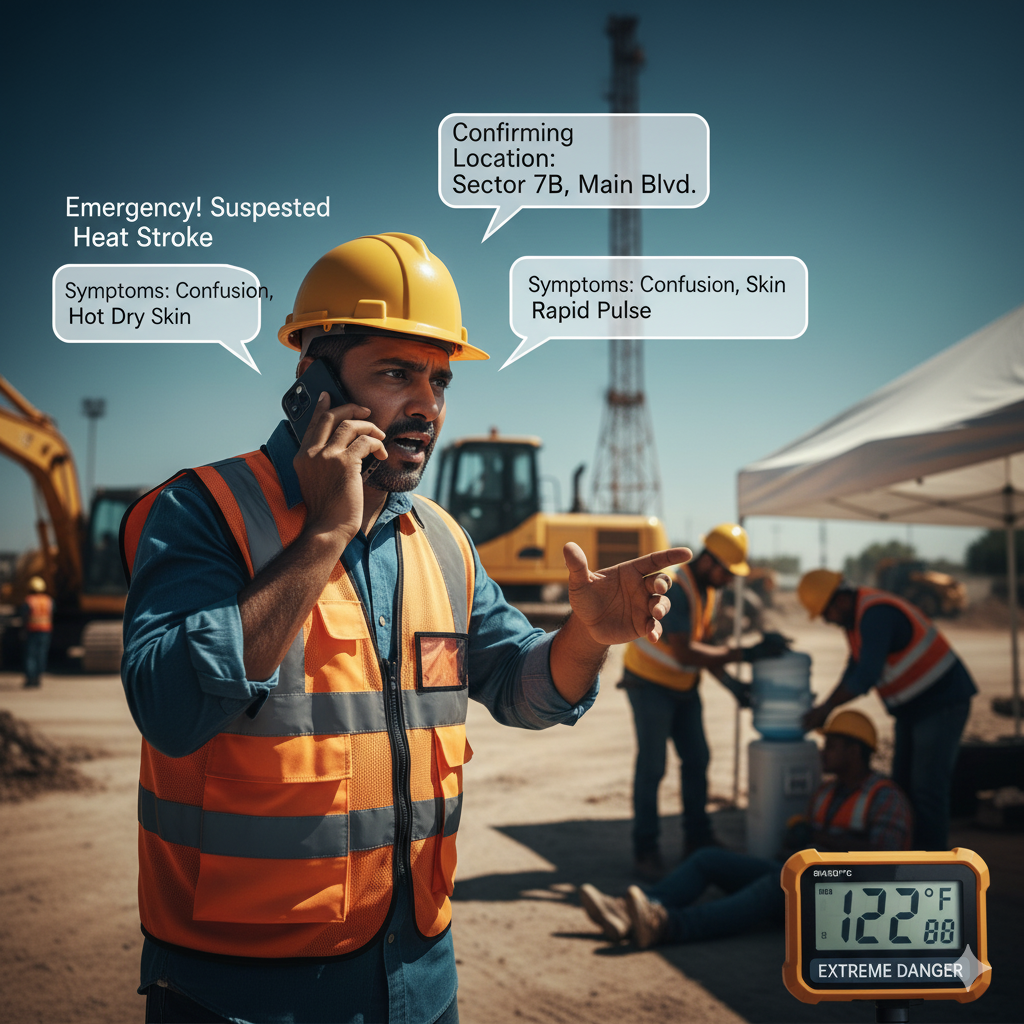
Immediate action can mean the difference between life and death. Follow these steps if heat stroke is suspected:
1. Call Emergency Services Immediately
Dial 112, 911, or your local emergency number. Provide details about the worker’s condition, symptoms, and exact location. Time is critical.
2. Move the Person to a Cooler Area
Get the affected worker out of direct sunlight. Preferably move them to an air-conditioned room or shaded location to slow the rise in body temperature.
3. Cool the Body Fast
Apply cold, wet cloths, ice packs, or fans to key areas such as the neck, armpits, and groin. If available, immerse the worker in cool water. The goal is rapid body cooling.
4. Do NOT Force Fluids
If the worker is unconscious, confused, or unable to swallow, do not attempt to give fluids, as this can lead to choking.
5. Monitor Vital Signs
Stay with the worker and check for breathing, pulse, and signs of shock until emergency services arrive.
Prevention: The Best Response
Preventing heat stroke is always preferable to responding to it. Strategies include:
Training: Educate employees and supervisors about heat stroke signs, prevention measures, and first aid procedures.
Buddy Systems: Pair workers to monitor each other for early signs of heat stress.
Hydration: Encourage frequent water intake and provide electrolyte drinks during extended heat exposure.
Scheduled Cooling Breaks: Implement work-rest cycles and shaded recovery areas.
Job Rotation: Rotate workers to cooler tasks or shaded environments during peak heat hours.
Monitoring Heat Index: Use heat index readings and weather forecasts to plan work schedules.
Workplace Protocols
A comprehensive heat stress management plan should include:
Heat stress risk assessment for all outdoor or hot indoor activities.
Acclimatization programs for new and returning workers.
Clear emergency procedures posted and communicated to all staff.
First aid kits equipped with cooling supplies like ice packs, wet towels, and fans.
Continuous employee awareness campaigns and toolbox talks during summer months.
By integrating prevention, early detection, and rapid response, organizations can protect workers, maintain productivity, and reduce liability.
